Creating Unique Company Sneakers: Our Process and Experience Working With Fortinet
A genuinely unique company sneaker takes more than a printed logo — it takes a real design process. Here is how Treec approaches custom company shoe projects, using our work with Fortinet’s “Mastermind” and “Cybernaut” sneakers as an example.
When a company decides to create its own branded sneaker, the result is often judged less on the logo itself and more on whether the shoe feels like a genuine product — something with real design intent, not a standard sneaker with a name stuck on it. Getting there requires a proper development process, not just a print run.
Treec worked with Fortinet on a custom sneaker project that included two distinct product concepts — “Mastermind” and “Cybernaut” — each combining a clean white leather base with a contrast suede heel tab carrying the debossed and printed branding. This article walks through the process behind a project like that, from concept to finished pairs.
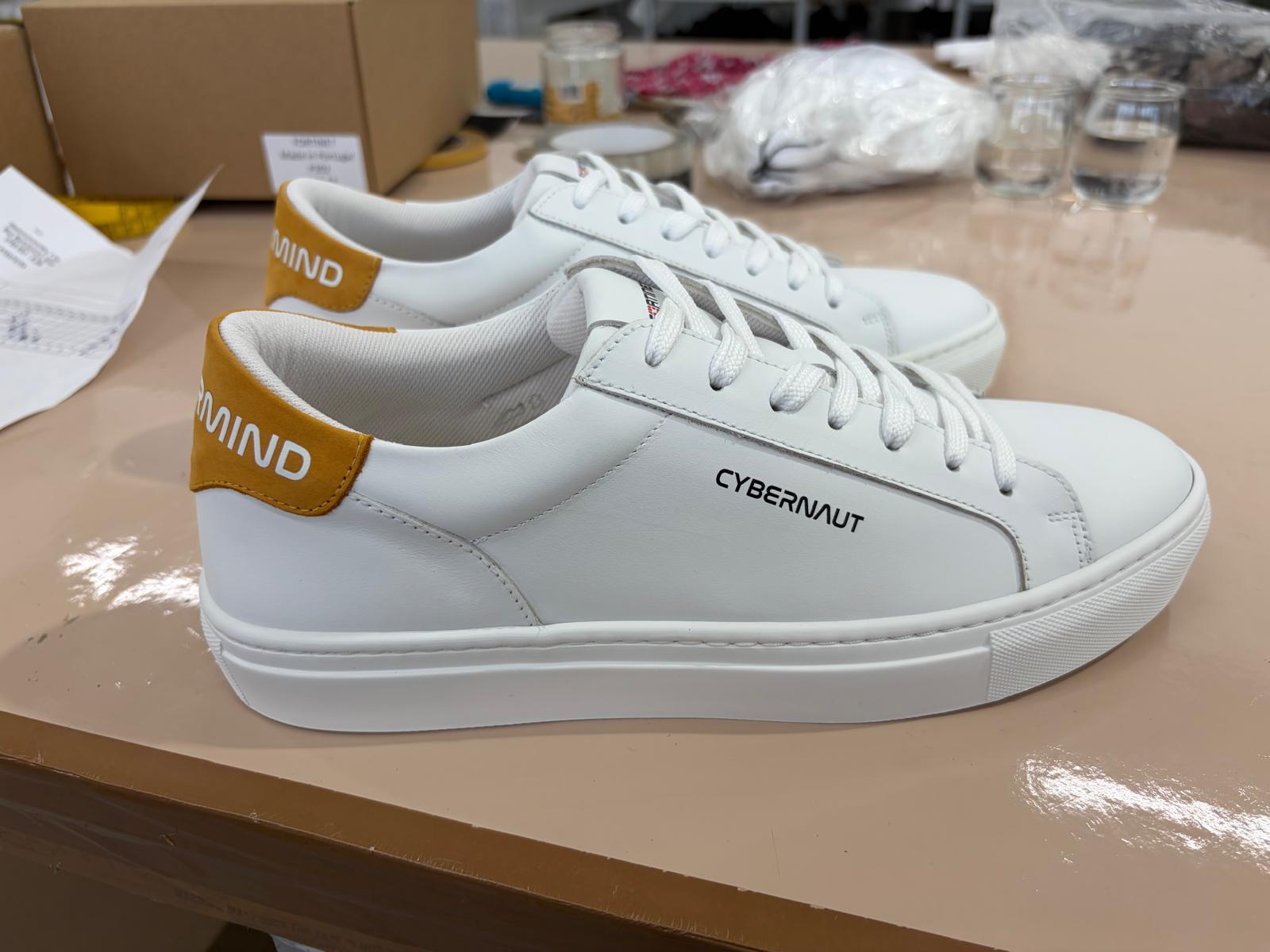
The “Mastermind” heel tab — debossed and printed wordmark on mustard suede
Why a Unique Company Shoe Takes More Than a Logo
Branding Needs a Placement Strategy, Not Just a Print
On the Fortinet project, the branding was placed on a contrast suede heel tab rather than printed flat across the upper — a placement choice that reads as considered design rather than promotional overprinting.
Material Contrast Signals Intent
Pairing a clean white leather upper with a colored suede heel panel, as on the Fortinet sneakers, creates visual structure that a single-material, single-color shoe cannot achieve.
Multiple Concepts Let a Brand Choose Its Direction
Developing more than one named concept — in this case Mastermind and Cybernaut — within the same project gives a brand real options to compare before committing to full production.
The difference between a forgettable branded sneaker and a genuinely unique one usually comes down to placement and material choices made early in development — not the production stage.
The Process, Step by Step
| Step | What Happens |
|---|---|
| 1. Concept briefing | Define the brand identity to express — for Fortinet, this meant a cybersecurity-inspired naming direction (Mastermind, Cybernaut) and a clean, technical aesthetic. |
| 2. Material and placement design | Select base materials, contrast panels, and where branding will sit — heel tab, tongue, insole — for maximum impact without overwhelming the shoe. |
| 3. Digital mockup | A rendered mockup is shared for approval before any physical sample is cut, keeping changes fast and cost-free. |
| 4. Physical sampling | Approved concepts are produced as real pairs to confirm fit, color accuracy, and branding execution — debossed logo, suede quality, stitching. |
| 5. Production | Once signed off, full production runs using the confirmed specification. |
Inside the Fortinet Project: Mastermind and Cybernaut
For Fortinet, Treec developed two named sneaker concepts. The “Mastermind” design features a mustard suede heel tab with the debossed and printed wordmark, set against a clean white leather base — giving the branding a premium, tactile presence rather than a flat printed logo.
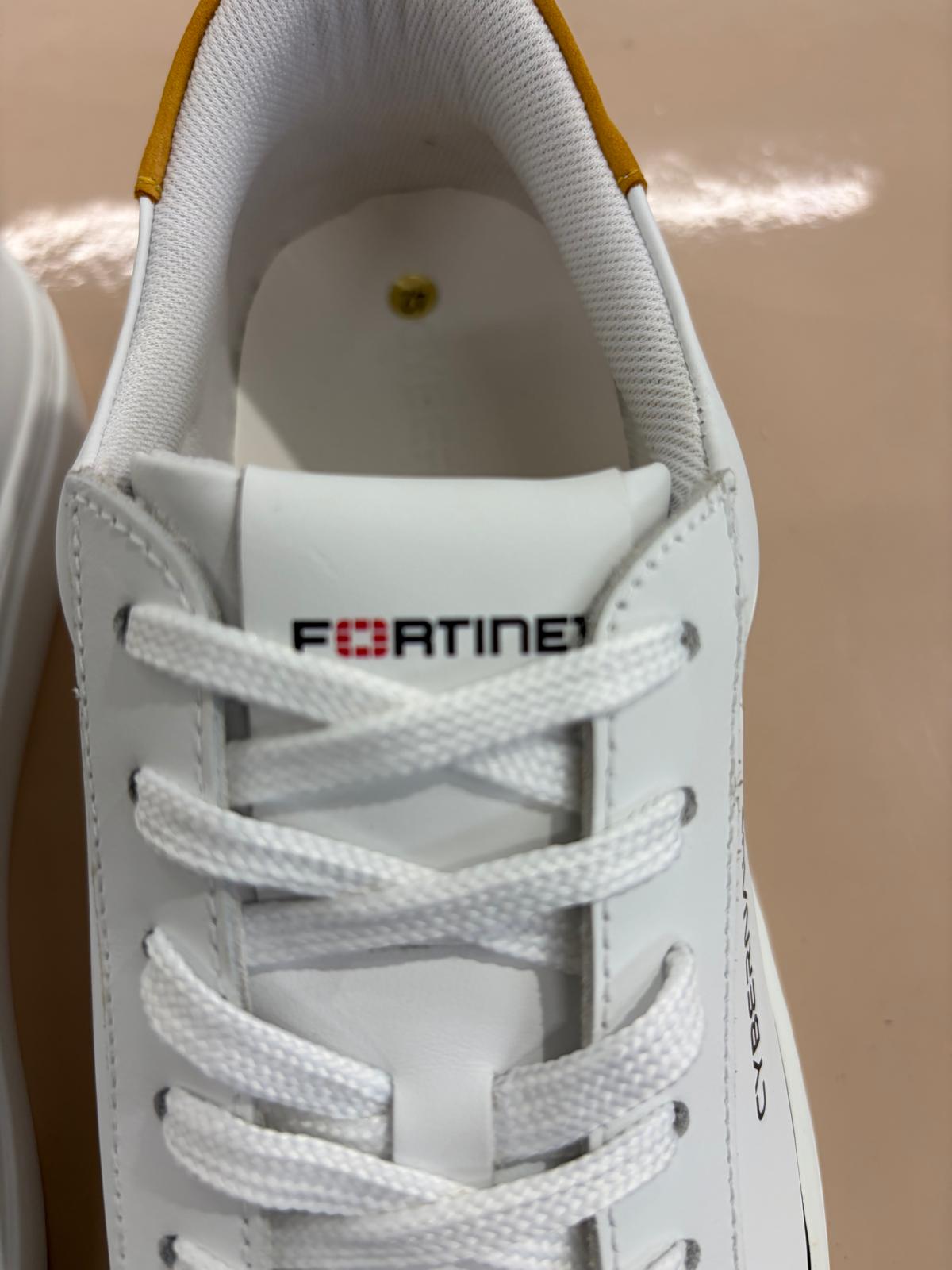
The “Cybernaut” concept carries the Fortinet branding on the tongue, paired with the same contrast suede detailing at the heel, reinforcing a cohesive design language across both pairs while giving each its own distinct identity.
Rather than a single generic branded sneaker, the Fortinet project delivered two distinct, named concepts — each combining premium materials with deliberate branding placement, reflecting the kind of design thinking Treec brings to custom company shoe projects.
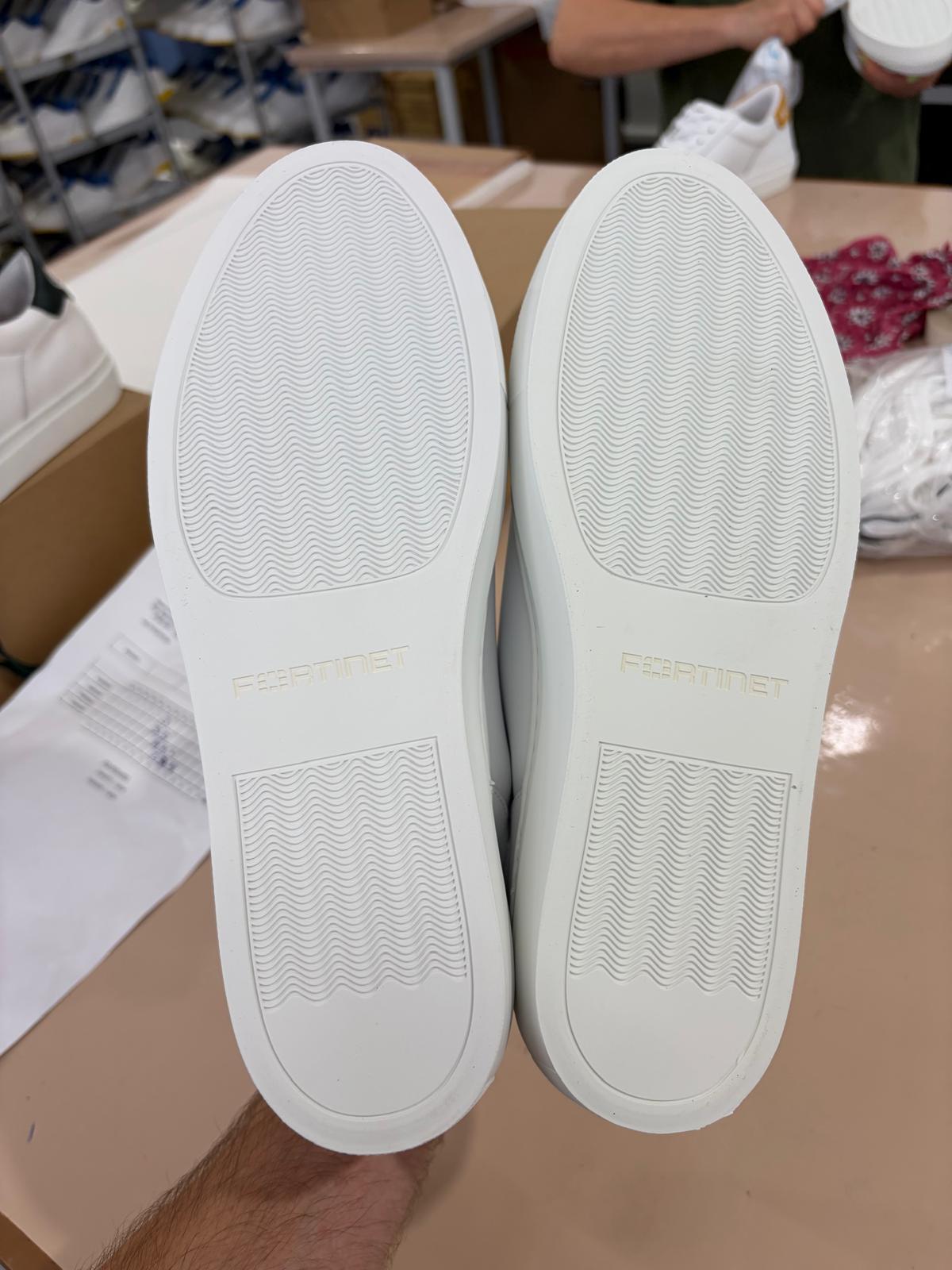
Both concepts side by side — Mastermind and Cybernaut
Fortinet branding on the “Cybernaut” tongue detail
What Makes a Company Shoe Project Succeed
Start with the identity, not the logo file
The strongest projects begin with a naming or design concept — like Mastermind or Cybernaut — rather than simply asking where a logo can be printed.
Use material contrast deliberately
A single accent material, well placed, does more for perceived quality than covering the shoe in branding.
Sample before committing to volume
A physical sample catches issues in color, texture, and fit that a digital mockup cannot fully reveal.
Consider more than one concept
Developing two directions, as with Fortinet, gives a brand a real comparison point rather than a single take-it-or-leave-it option.
Frequently Asked Questions
Deliberate branding placement (such as a contrast heel tab rather than a flat printed logo), material contrast between the base and branded panel, and a proper sampling process before full production.
Treec developed two named custom sneaker concepts for Fortinet, “Mastermind” and “Cybernaut,” each combining a white leather base with contrast suede branding detail.
Concept briefing, material and placement design, a digital mockup for approval, physical sampling to confirm fit and branding execution, then full production.
Yes. Developing multiple named concepts within one project, as with Fortinet’s Mastermind and Cybernaut designs, allows a brand to compare directions before committing to production.
CONTACT US
Want a truly unique company sneaker, not just a printed logo? Let’s talk.